Artificial intelligence is becoming a defining layer of modern software, reshaping how companies build, deliver, and scale digital products. Reputable global surveys show that a majority of enterprises are already experimenting with or deploying AI solutions to streamline operations, personalize user experiences, and unlock new sources of revenue.
Ukraine’s SaaS ecosystem, known for strong engineering talent and product-driven startups, is also moving decisively in this direction. From productivity tools and pricing platforms to financial automation and creative AI, local companies are weaving intelligent capabilities into their offerings to compete on the global stage. Their experience highlights both the opportunities and the real-world challenges of adopting AI in fast-growing product environments.
To better understand the balance between promise and reality, CIGen spoke with Ukrainian SaaS leaders about the AI scenarios they are piloting and the challenges they encounter in scaling them.
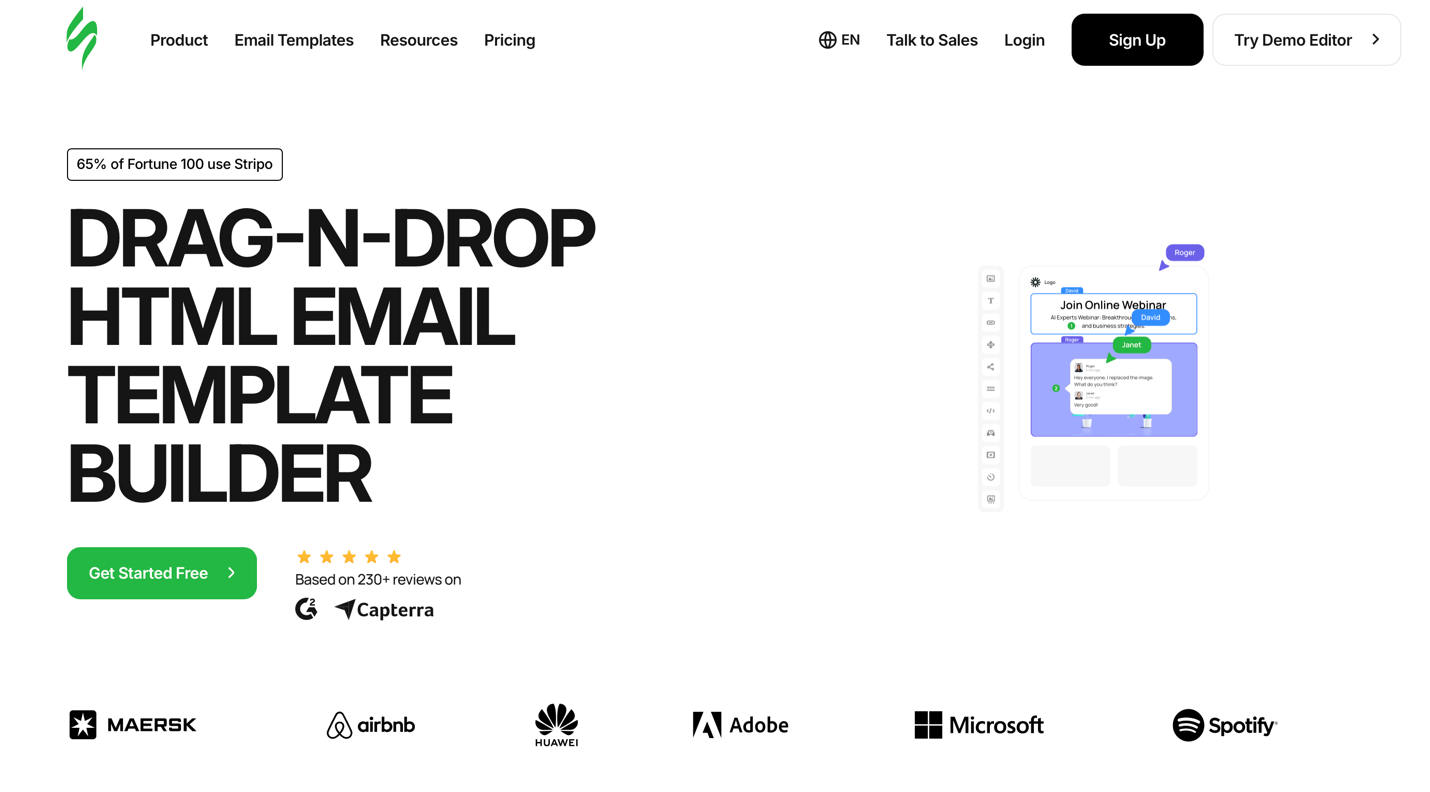
Dmytro Kudrenko, the Founder and CEO of Stripo email template builder, describes their AI adoption path with anticipation of further advancements in the domain:
“At Stripo, we began with simple AI use cases, such as text generation within email templates, quick wins that immediately saved time for marketers. However, real transformation began when we moved beyond content and started rethinking the entire user experience. We are now building a multi-agent AI architecture where agents can work together toward business goals: from refining a CTA button in a single email to orchestrating a full promotional campaign for a webinar, including structure, strategy, and HTML adaptation.
I’m convinced that AI won’t just accelerate existing workflows, it will replace the traditional product UX layer. Drag-and-drop editors will soon become niche tools for special cases, while natural goal-based collaboration with AI agents becomes the primary way users build things. The main challenge is not the models, but product architecture, companies must redesign their systems so that AI becomes a first-class user alongside humans.
My advice to SaaS teams: review how your microservices communicate, because from now on, you’re building not only for developers and customers, but also for AI.”
Top technical minds from other successful UA-rooted SaaS companies, like Competera, Sitechecker and FuelFinance, deep-dive into their journey of mastering AI for their business needs and cases by providing insights on their use cases, challanges and the future outlook of AI in their respective domains.
To begin, we asked the founders and product leaders how they currently apply AI in their day-to-day operations, from automating processes and enhancing user experiences to driving new levels of decision intelligence. Their answers illustrate how Ukrainian SaaS innovators are embedding AI at every layer of their product ecosystem:
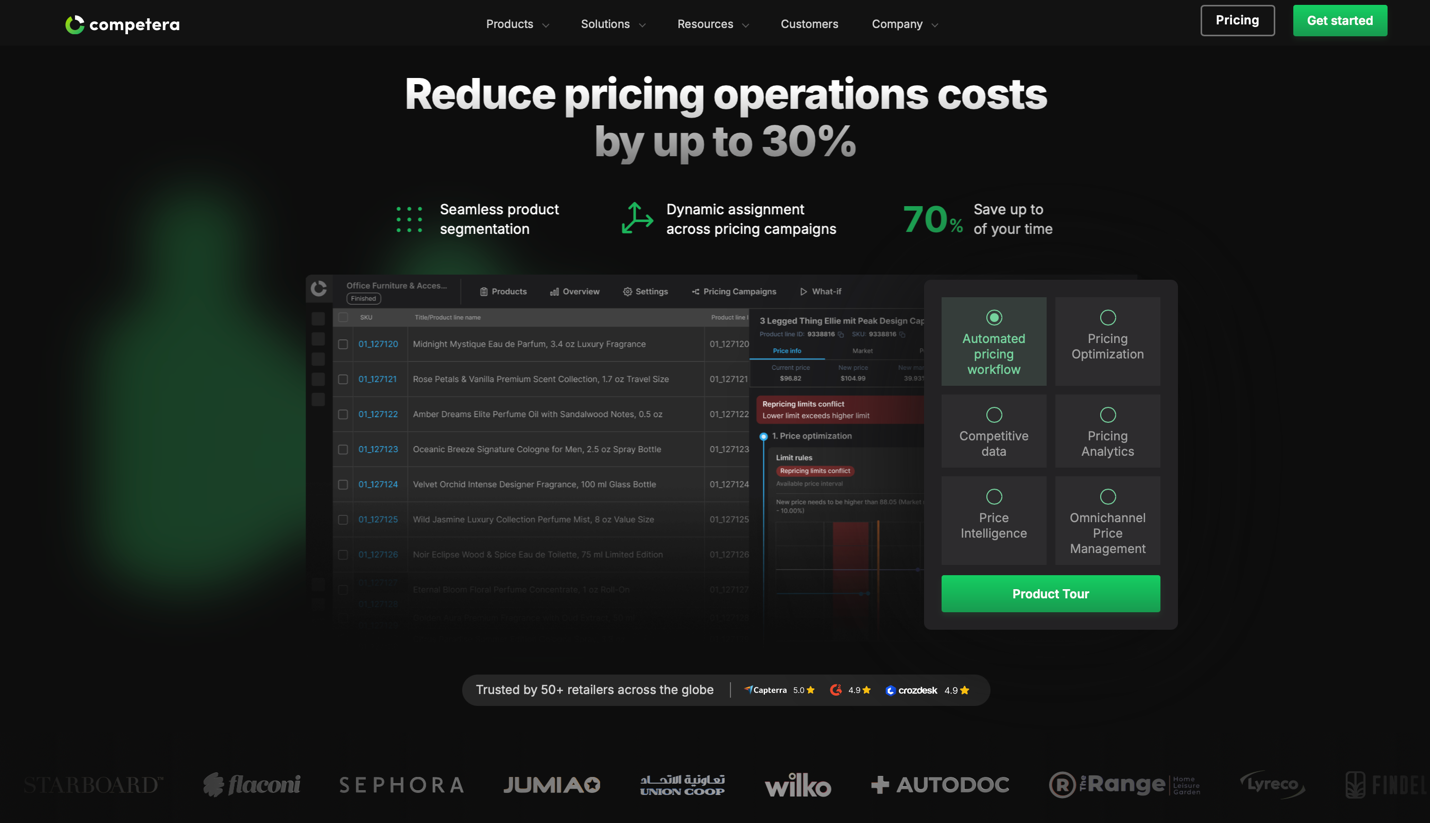
Dmytro Chernyak, Product Manager, Competera:
“Competera was integrating AI into the core of our product long before the hype around GenAI began. Since 2018, our flagship AI-native Pricing Platform, built on Contextual AI, has helped retailers automate pricing optimization across their entire assortment, making them more resilient, profitable, and efficient.
Our deep-learning models consider a wide range of factors that influence customer purchasing behavior, from product attributes and promotions to weather patterns and local competition, evaluating millions of price combinations in minutes to identify effective pricing strategies.
In 2024, we extended our AI functionality by integrating agentic AI, built on RAG architecture, across our product ecosystem to provide customers with autonomous, precise decision-making and real-time responses, powering automated customer support, analytical insights, and explanations behind AI-generated price recommendations.”
Simon Bezhenov, Product Marketer, Sitechecker:
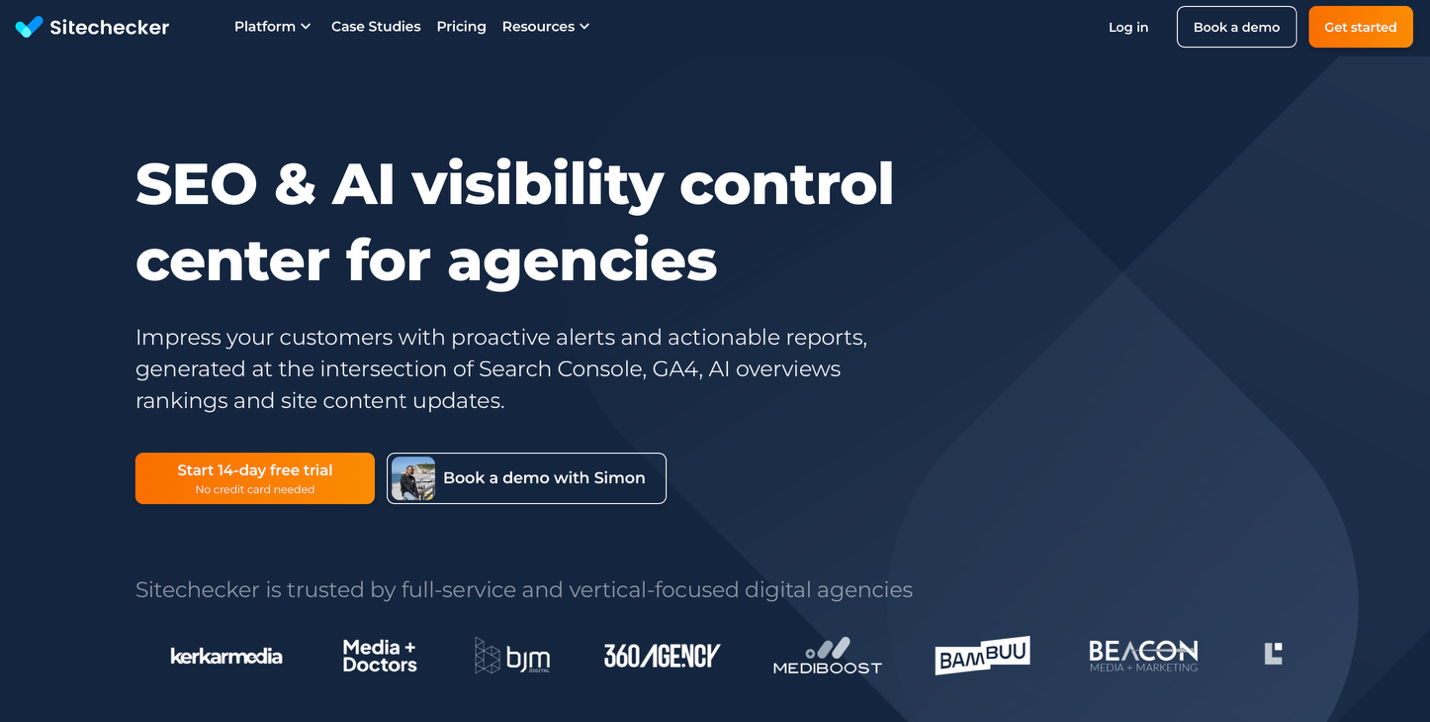
“So, for sure, we first started with the general use of AI: things like content generation and making routine tasks easier. However, in terms of the product, we’ve only recently begun using AI for automation. We’re currently combining it with the N8n platform.
Essentially, we capture new leads and detect users who churn, and then we follow up with them via highly personalized AI-generated emails. The messages are customized based on the data they provided when registering with us, so each one feels unique and relevant.”
Oleksandr Riabukha, Head of R&D, FuelFinance:
“Our goal is to make AI the core system of our product. One of the most impactful implementations so far is the automatic generation of financial reports for clients. Previously, our managers spent a lot of time preparing reports manually and sharing them via Slack.
Currently, a text-based analytical summary is automatically generated from client account data, then it’s formatted into a clear, easy-to-read visual report for the client. This automated feature delivers several key benefits: significantly reduces the team’s manual workload, enables faster decision-making, and helps clients better identify financial risks and opportunities.
We’re also developing an AI module for real-time financial analysis and “what-if” scenarios, allowing clients to instantly see how changes in revenue or expenses could affect their business.
Overall, our AI system accelerates access to insights and makes the decision-making process much more efficient.”

Every company’s AI journey begins with deciding where to start. We asked how these teams identified the first areas worth automating or augmenting with AI, and what criteria guided their prioritization.
Dmytro Chernyak, Competera:
“We focus on AI initiatives that automate repetitive tasks, accelerate decision-making, and improve overall team productivity, freeing up our time for more strategic, complex work.
We use AI agents integrated with LLMs to automate internal knowledge management and employ GenAI-based tools for rapid prototyping, code refinement, multi-language video tutorials, technical documentation, and customer research.
Our guiding principle is simple: if AI can shorten the cycle from ideation to shipping features, we invest.”
Simon Bezhenov, Sitechecker:
“As for AI initiatives, we do have a certain level of prioritization, but it’s not our top priority. Often, some solutions simply don’t require AI at all. Of course, AI is great for generalization, search, and building insights from data, but it needs to be thoroughly tested before we roll it out.
So right now, our main focus is to implement AI only when it’s been properly validated and ready to deliver real value to customers.”
Oleksandr Riabukha, FuelFinance:
“We started with a deep analysis of all project processes: what our financial managers do, which requests they receive most often, and what tasks take the most time.
Based on this, we identified which of those tasks could be delegated to an AI agent.Our prioritization criteria are simple:
- Time intensity – which tasks consume the most hours for the team.
- Client value – what has the biggest impact on the client’s experience and decision-making speed.
- Technical feasibility – how quickly we can realistically implement the solution.
After that, we create a prioritized list and immediately start developing the first features that bring tangible results for both clients and the team.”
Even the most advanced AI strategies face practical obstacles. From data readiness to user trust, we wanted to know what real-world challenges these leaders have encountered while integrating AI into production systems.
Simon Bezhenov, Sitechecker:
“The main hurdles we face when integrating AI into our product or workflows are finding meaningful use cases that truly fit our product. Since we primarily build reports and insights based on clients’ existing data from their own tools, the scope for AI is somewhat limited.
The main opportunities are in generating content from this data and producing more precise insights and analyses.”
Oleksandr Riabukha, FuelFinance:
“The main challenges we face are data quality and readiness, accuracy of model responses, and tone of communication. Let me extend:
Data readiness.
Sometimes the model simply doesn’t have enough information to produce a high-quality analysis. We addressed this by adding a “disclaimer” in AI responses, it indicates the level of data completeness and explains how reliable the result is. If data is missing, the model clearly communicates that, while still using the available inputs to make the best possible assumption.Accuracy of responses.
Since we work with financial data, the cost of error is very high. Our priority is to minimize model “hallucinations” and ensure that every conclusion is based solely on verified sources.Tone and communication format.
Most of our users are founders without a financial background. That’s why we continuously refine the “tone of voice” of AI responses, they must be clear, concise, and easy to understand while still delivering all the essential financial insights.”
Looking ahead, we invited our interviewees to share their vision for the next wave of AI opportunities in their industries, and how emerging technologies might reshape their business domains over the next few years.
Dmytro Chernyak, Competera:
“Nowadays, the capabilities of agentic AI systems make it possible to automate certain user workflows by seamlessly integrating different models in order to perform processes successfully from start to finish. The next step will entail end-to-end AI agents that orchestrate the most complex enterprise workflows by sourcing real-time data on demand and interconnecting different systems and administrative tasks.
We expect that some core operational domains, such as financial management, business analysis and forecasting, customer service, assortment management and replenishment, promotion execution, and pricing, will become largely automated, with humans focused on strategy, supervision, and policy.
In practical terms, that means two or three managers can achieve what once required several departments.”
Simon Bezhenov, Sitechecker:
“As an SEO tool – similar to competitors like SEMrush and Ahrefs – the biggest opportunities for AI in our sector are in automated content generation, technical SEO improvements, and AI-driven SEO recommendations. However, this also heavily depends on Google’s direction and how search engines evolve in this space.”
Oleksandr Riabukha, FuelFinance:
“I believe the biggest opportunity lies in the rise of multi-agent systems that can automate financial work end-to-end while ensuring accuracy.
This shift will redefine how we interact with financial data, moving from fragmented, manual processes to a faster, collaborative, and more intuitive way of working with finance.In essence, it’s a complete rethinking of how open-source and financial tools integrate, turning finance from a static reporting function into a dynamic, intelligent system that works alongside teams in real time.”
Finally, we asked each expert to share their lessons learned: what advice they would offer to SaaS founders who are considering adopting AI or scaling it within their existing products:
Simon Bezhenov, Sitechecker:
“Right now, a really popular topic is “go-to-market engineering.” Essentially, it means structuring your personas and audience into specific cohorts and then using AI-powered personalization for outreach and positioning. This approach allows you to do the same work tens or even hundreds of times faster than manually, while keeping personalization quality extremely high.
So, overall, AI doesn’t change everything, it just makes the manual work easier, faster, and more efficient, while helping you extract deeper insights from your data.It’s a massive productivity boost – 10x or even 100x.”
Oleksandr Riabukha, FuelFinance:
“Actually, my advice is quite simple. As I mentioned earlier, start by identifying tasks or features that either: already exist but are currently done manually and could be automated, or don’t exist yet but would bring real value if they did.
Write those processes down and test how an AI model could handle them. See what happens, tweak it, and you’ll likely get a pretty quick, and surprisingly good, first result.
But here’s the important part: a fast result doesn’t mean a high-quality one. Getting an early win is easy; building a system that delivers consistently accurate, stable results – that’s where the real challenge lies today.”
Anton Hrynenko, CTO, Stripo:
“At Stripo, we intentionally took a measured approach rather than trying to tackle everything at once. We began with small, focused steps, where the value was immediately apparent. Initially, we focused on enhancing text within specific template blocks in the editor, then gradually added image generation capabilities. It was only after accumulating practical experience that we advanced to more complex scenarios and full email generation.
My advice to SaaS companies implementing AI: avoid jumping on the hype bandwagon. Rather than asking, “Is there enough AI in our product?”, ask, “Where can AI deliver the most value?” Poorly executed AI often detracts more from the product than having none at all.”
Artificial intelligence is quickly becoming the new operating system of business. The insights shared by Ukrainian SaaS leaders mirror global trends: according to McKinsey’s State of AI report from March 2025, 78% of organizations have already adopted at least one AI capability, with the strongest momentum seen in marketing, product development, and service operations.
Yet, while adoption is accelerating, the journey is far from uniform. Many companies worldwide still struggle with foundational readiness: data quality, integration complexity, and organizational change management remain persistent barriers. What distinguishes successful adopters is a pragmatic, iterative approach: starting small, focusing on measurable value, and building AI into core architectures rather than treating it as an add-on.
Ukraine’s SaaS sector embodies this pragmatic innovation mindset. By focusing on product usability, cross-domain automation, and transparent AI-human collaboration, these teams are positioning themselves as part of the global movement toward intelligent, adaptive software.
Their stories echo a wider truth: AI transformation reengineers how digital products think, learn, evolve, and serve. As the global SaaS community continues this transition, Ukraine’s product leaders are demonstrating that thoughtful adoption, technical excellence, and resilience can drive meaningful innovation with global impact.
Artificial intelligence is becoming a defining layer of modern software, reshaping how companies build, deliver, and scale digital products. Reputable global surveys show that a majority of enterprises are already experimenting with or deploying AI solutions to streamline operations, personalize user experiences, and unlock new sources of revenue. Ukraine’s SaaS ecosystem, known for strong engineering […]
https://itcluster.lviv.ua/wp-content/uploads/2025/10/ai-adoption-for-saas-in-ukraine-by-cigen.io_.png


